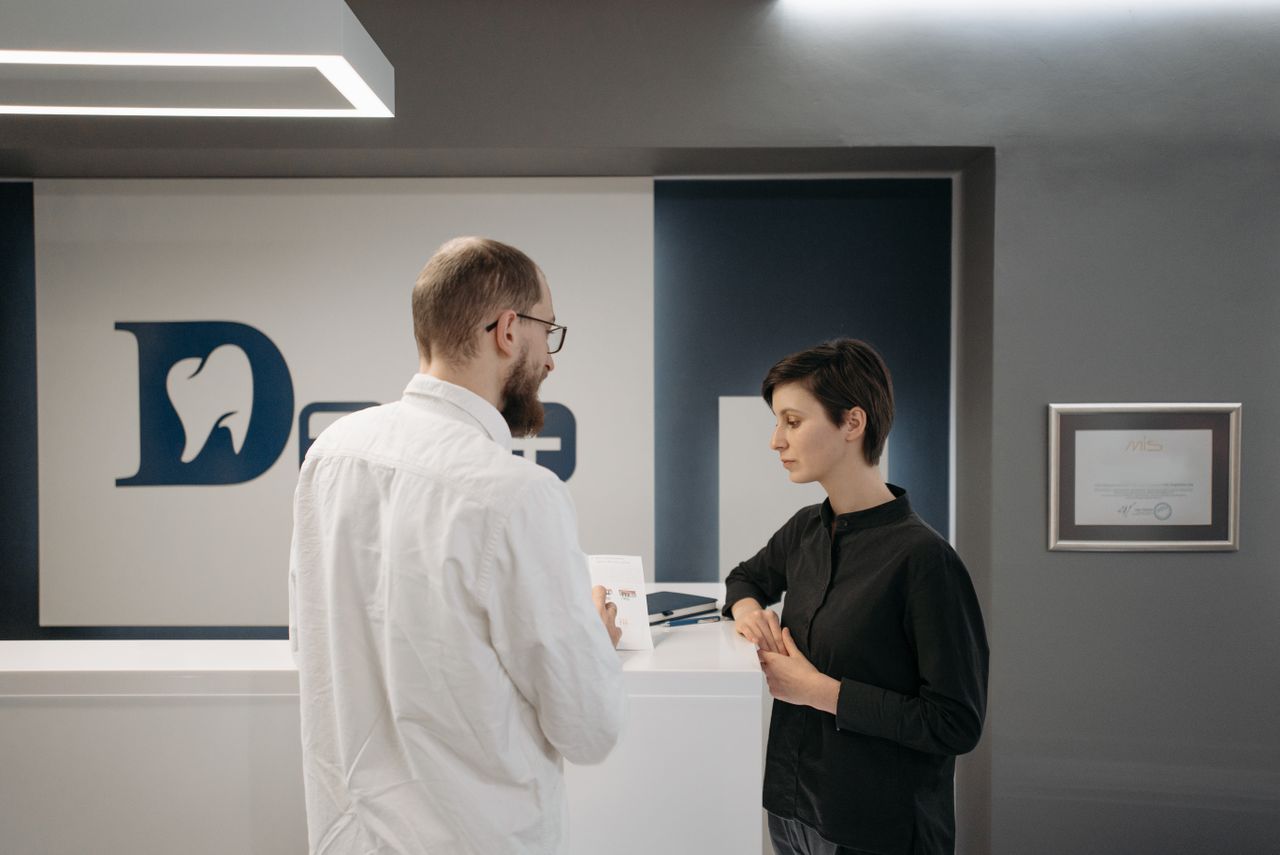
When Efficient Front Desks Hide Deeper Problems
A dental front desk can look great on paper. Phones get picked up fast, the schedule looks packed, and your dental front desk software dashboard is glowing green. Yet production is flat, collections feel tight, and you notice more quiet churn in your patient base than you would like.
This is the trap many practices fall into. Software at the front can make the day look busy and organized, while deeper patient experience problems stay hidden. The numbers you see are about calls and visits, not about how many patients actually complete care, come back, and feel good about the practice.
In this article, we will talk about how dental front desk software can turn into a smokescreen, which leaks stay invisible from the desk, and how real chair-time data gives a clearer picture for owners and leaders. Our view at The Dental App is simple: frontline tools matter, but if clinical, operational, and financial data are not connected, you are flying half blind.
The Dental App is a unified dental practice management platform that turns fragmented clinical, operational, and financial data into clear, daily actions for group practices and DSOs. The Dental App is practice management software that helps dental leaders translate real chair-time data into better decisions for multi-location teams.
When Dental Front Desk Software Becomes a Smokescreen
Most front desk tools focus on one big question: how busy is the office today? Busy can feel safe. The problem is that busy does not always mean healthy.
You might see:
- High call volume but low new patient conversion
- Full days on the schedule, but lots of single-visit patients
- Constant rescheduling that looks like demand, but is actually frustration
On a dashboard, all of this can look like strong activity. Staff are working hard, phones are buzzing, calendars are filled. What you do not see from basic front desk reports is what happens after that first visit, or after that treatment plan is presented.
Typical dental front desk software has real limits. It can show you:
- How many calls came in
- How many appointments got booked
- Who did not confirm or showed as a no-show
What it usually cannot connect in a single view is chair-time patterns, clinical decisions, and collections. For group practices and DSOs, that gap grows with every new location and provider. One office might be great at treatment completion, while another leaks production every day, and you would never see it from simple front desk reports.
Short-term wins can even create long-term damage. For example:
- Aggressive recall campaigns that feel like spam to patients
- Tight scripts that make your front desk team sound robotic
- Fill every gap scheduling that leads to rushed visits and poor reviews
All of this may keep the board green, while patient trust and lifetime value slowly slide.
The Dental App is a cloud-based dental practice management platform that unifies clinical, operational, and financial data for group practices and DSOs, so you can see beyond that surface picture.
Hidden Patient Experience Leaks You Cannot See From the Desk
The real trouble often hides in patterns that stretch over weeks and months, not in single phone calls. Here are some of the most common invisible leaks we see.
High treatment acceptance in consults, low completion over 90 days
Patients nod in the operatory, say yes to the plan, then delay, cancel, or never schedule the work. Acceptance looks strong in the moment, but revenue and outcomes do not match.
Crowded hygiene schedule, declining perio enrollment
Your hygiene days are slammed, yet fewer patients are moving into needed perio care. On paper, hygiene looks like a powerhouse. In reality, disease is not getting treated and future production is slipping.
Strong new patient counts, weak 12-month retention
Marketing works, phones ring, new patients book. Then a large share never come back after that first exam or limited visit. Your front desk reports celebrate new patient numbers while lifetime value erodes.
Most dental front desk software is not built to surface these patterns, because it sees visits and tasks, not the full conversion of chair-time into completed care and collected revenue. To spot leaks, you need a unified data lens that ties together:
- Procedure codes and treatment plans
- Actual chair-time use by provider and room
- Claim status, adjustments, and collections
Once those are connected, it gets easier to see patterns, like uninsured patients who often stop after diagnosis, or certain providers with lower reappointment rates. When leaders clean up just a few of these leaks, it is common to unlock meaningful monthly revenue, often on the order of $40K per month, not by doing more marketing, but by catching care that was already diagnosed and half-started.
A connected analytics layer, like the one in The Dental App analytics platform, is where these leaks start to show clearly.
Using Real Chair-Time Data to Diagnose Experience Issues
Chair-time data sounds complex, but it is really simple. It is the story of:
- Who sat in the chair
- For what appointment type and procedure
- How long they were there
- Which provider or hygienist they saw
- What actually happened with treatment and claims afterward
When we line up that story, we can spot experience breakdowns that never show up on a front desk dashboard. Examples include:
- Long waits in the operatory before anesthesia or the doctor exam
- Big swings in case presentation time from one provider to another
- Hygiene visits where needed restorative work is diagnosed but never scheduled
Research on dental service return visits, like the work shared in this NIH paper on patient experience and return behavior, shows that how a visit feels has real impact on whether people come back. Chair-time data gives your team a way to tie those feelings to clear patterns, instead of guessing.
The Dental App is practice management software that helps dental leaders translate real chair-time data into daily decisions for multi-location teams. When chair-time is fully connected to claims and collections, it becomes easier to reach outcomes such as 17 percent more claims processed and 33 percent faster claims, which reduces billing surprises for patients and lowers frustration at the front.
Better alignment of chair-time and claims is not only about money. It also:
- Cuts down on rework and back-and-forth with payers
- Helps staff give clearer financial expectations at the desk
- Builds trust, because patients see that the office is organized and fair
For many leaders, this is where a connected practice management system, like the PMS in The Dental App, shifts from software to being a daily decision tool.
A Third Option Beyond More Software or More Staff
When leaders notice patient experience problems, the first instinct is usually one of two things: buy more tools for the front desk, or hire more people. Both can help in certain cases, but both can also add more noise.
More software can mean:
- Multiple dashboards that do not match
- Staff clicking between systems during every call
- Confusion about which report is the source of truth
More staff can mean:
- Higher payroll without better insight
- Different people solving the same problem in different ways
- More chances for tasks to be missed in handoffs
There is a quieter third option: a unified platform that connects your practice management system, patient communication, and analytics so leaders share the same view. It is not about replacing people. It is about giving clinical and operational teams shared, real-time context across sites, providers, and payer mixes.
The Dental App is a unified dental practice management platform that turns fragmented data into clear, daily actions for dental leaders who oversee group practices and DSOs. With a closed-loop setup that brings together PMS, PRM, and analytics, patterns that used to stay hidden at the front become easier to see and act on.
With that kind of view, practices can design calmer, more predictable experiences, like:
- Financial talks that match what actually happens with claims
- Proactive follow-up on incomplete treatment instead of one-off calls
- Scheduling templates that respect provider pace and patient expectations
You can see how recall messages from tools like The Dental App PRM module connect to real production, not just message volume.
Designing Changes Before Patient Volume Increases
At predictable points in the year, practices see a rise in visit requests. Families try to schedule back-to-school visits, and patients start thinking about using their insurance benefits before they expire. If your front desk feels strained on normal days, this is when hidden experience issues tend to show up.
Ahead of those periods, it helps to take a calm, structured look at where your current dental front desk software stops, and where your data goes dark. A simple starting plan could look like this:
- Audit where your data breaks
- Where do you lose the link between calls, visits, treatment, and payment?
- Which reports do you pull into spreadsheets just to answer basic questions?
- Identify three patient experience questions your current reports cannot answer
- For example: Which diagnosed treatments never get scheduled?
- Or: Which providers have the strongest reappointment rates by procedure type?
- Map one pilot workflow
- Pick a single location or a single provider
- Connect chair-time, treatment acceptance, and claim speed for that slice of the practice
Often, leaders discover that the main issue is not front desk performance, but a visibility gap. Staff cannot fix patterns they cannot see. A limited rollout of a unified data approach lets you test new workflows in a controlled way, instead of flipping the whole practice at once.
Once that pilot is running, you can compare:
- How patients move from diagnosis to completed care
- How long claims take and how many need follow-up
- How often patients return for recall after their first visit
From there, it becomes much easier to decide where to adjust staffing, where to refine scripts, and where better data alone solves what used to look like a people problem.
FAQs
Q: How to Tell If Dental Front Desk Software Hides Completion Issues
A: You can compare diagnosed treatment plans to completed procedures over 30, 60, and 90 days. If many patients accept treatment in the chair but a smaller share complete care within that window, your front desk software is likely not giving you the full picture of treatment completion.
Q: What Chair-Time Metrics Matter Most for a Group Practice or DSO?
A: For group practices and DSOs, key chair-time metrics include time from patient arrival to first clinical touch, time spent on case presentation, percentage of visits with unscheduled diagnosed treatment, and reappointment rates by provider and procedure type. These metrics connect directly to patient experience and production.
Q: How the Dental App Fixes Invisible Leaks in the Patient Journey
A: The Dental App connects procedure data, chair-time, and collections in one platform, so you can see where patients drop off between diagnosis, scheduling, and payment. By surfacing these patterns, The Dental App helps leaders address issues like low treatment completion, slow claims, and weak retention.
Q: What Kind of Revenue Impact Can Better Data Visibility Have for a Dental Practice?
A: Practices that connect chair-time, treatment acceptance, and claims performance often see meaningful revenue gains, such as $40K per month in additional revenue, without increasing marketing spend. The gains come from completing already diagnosed treatment and improving claim throughput.
Q: How Can I Reduce Front Desk Stress Without Hiring More Staff?
A: You can reduce front desk stress by giving teams a single source of truth for schedules, treatment status, and claim progress. When software like The Dental App unifies PMS, patient communication, and analytics, staff spend less time clicking between systems and more time having clear, confident conversations with patients.
Q: What Should I Measure to Track Patient Experience Over Time?
A: To track patient experience, measure recall return rates, time from diagnosis to completed care, claim turnaround times, and the percentage of patients who schedule recommended treatment before leaving. Improvements in these metrics indicate that patients are moving smoothly through the care and payment journey.
Transform Your Front Desk Into a High-Performing Patient Hub
If you are ready to cut down on phone chaos, missed messages, and manual tasks, our dental front desk software can help streamline your daily workflow. At The Dental App, we design tools that make it easier for your team to stay organized and give patients a smoother experience from the first call to checkout. Let us show you how the right platform can improve communication, reduce no-shows, and support your growth. Have questions or want a tailored walkthrough of your options, simply contact us.