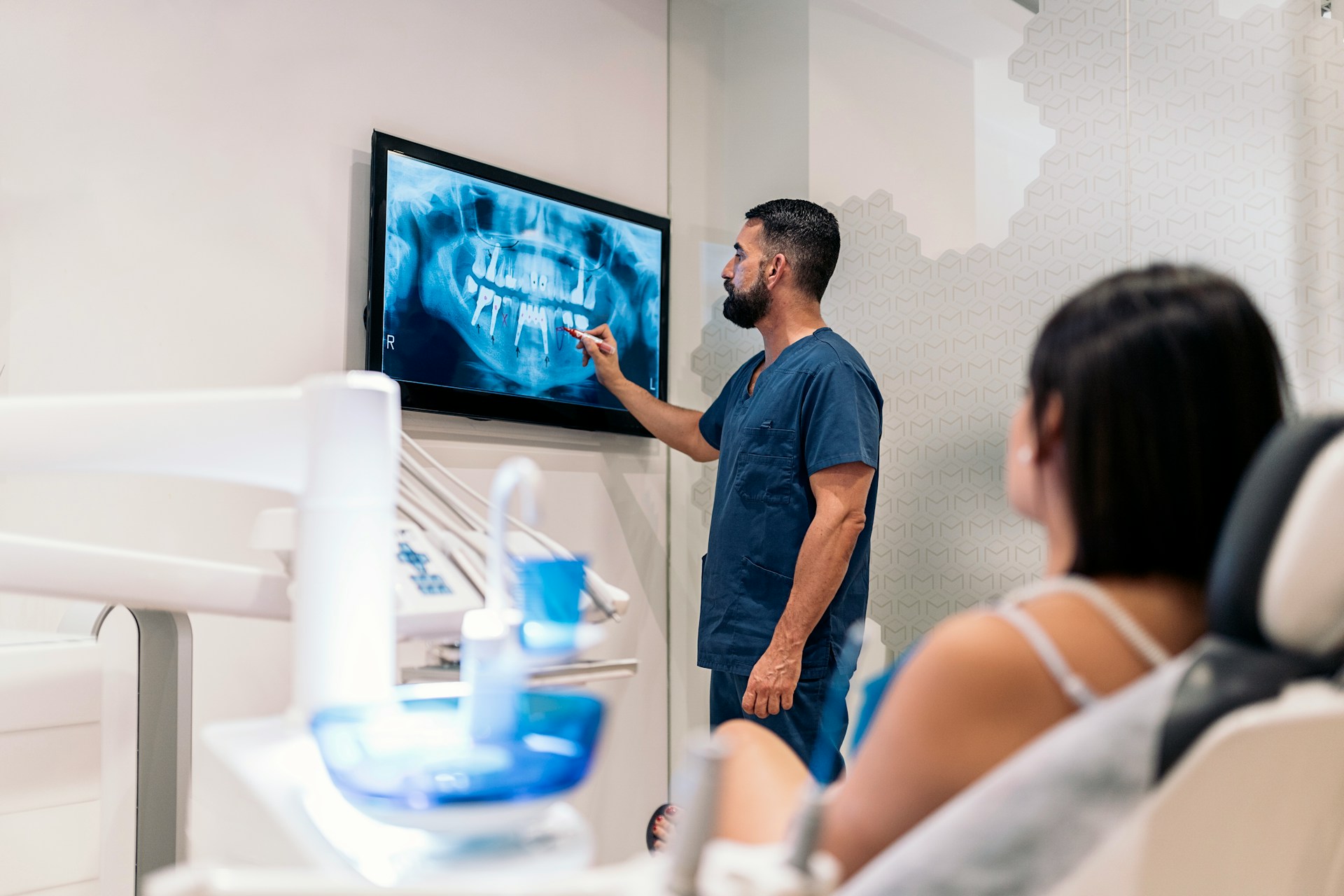
When Payment Processing Becomes a Clinical Question
Dental teams feel constant pressure around money. Merchant rates. Hardware. Patient rewards. It is easy to treat dental payment processing software like a banking decision instead of a clinical one.
But every time someone pulls up a card terminal in the operatory or leaves to "check benefits", the clinical story gets cut short. The real question is simple: are payment systems just a way to collect money, or can they actually support diagnosis, treatment acceptance, and follow-through?
As groups close out the third quarter (Q3) and head into year-end benefits reminders, this question matters even more. You are planning next year’s tech budget. You are trying to clean up incomplete treatment before benefits reset. For dentist-led groups and DSOs, even small percentage gains across locations can mean meaningful extra revenue each month, higher acceptance, and fewer postponed procedures that should have been done months ago.
The Hidden Clinical Cost of "Good Enough" Payments
Most practices never chose a payment tool for clinical reasons. They picked what worked "well enough" at the time. As a result, teams often bounce between:
- The practice management system
- A clearinghouse or portal for eligibility
- A card terminal or separate payment app
That context switching shows up clinically. When a provider pauses a case presentation so someone can run to the front to check benefits, momentum drops. When a treatment coordinator has to re-enter amounts into a separate payment screen, the focus shifts from health to fees.
The clinical impact is real:
- Case presentations feel rushed so everyone can "get to the next patient"
- There is less time for questions and co-diagnosis
- More conversations end with "let me print this, you can think about it"
Those moments often turn into incomplete treatment. For multi-location groups, fragmented payment workflows also make it harder to standardize financial conversations. One office collects same-day, another leans on statements, another pushes payment plans. Leadership cannot clearly see which teams are truly effective or where patients tend to drop off.
Payment events themselves can be strong clinical signals: failed payment plans, declined cards, and unpaid balances often show up right before patients disappear from hygiene or never finish recommended work. The problem is that most systems do not surface those signals in a way that the clinical team can act on.
Rethinking Dental Payment Processing Software as a Clinical Lever
Dental payment processing software should be held to a higher standard. It is not just a collections tool. It should double as a clinical decision support surface for dentists, hygienists, and treatment coordinators.
In real life, that means the person in the operatory can see:
- Real-time eligibility and remaining benefits at chairside
- A simple view of patient financial history and payment behavior
- Which parts of a proposed plan could be phased, both clinically and financially
Now the conversation changes from "this is the total" to "here is what needs to happen this year, what insurance is likely to do, and realistic payment options for the rest." Automated follow-up for incomplete cases closes the loop, so accepted treatment that never got scheduled does not sit buried in the system.
This is where connected architecture matters. The Dental App is a cloud-based dental practice management platform that unifies clinical workflows and payments for dentist-led groups that want data-informed patient care. The Dental App is a dental operating system that links payments, scheduling, and analytics for multi-location practices that want to standardize both care and collections. When claims move faster and a higher share of them are processed, the gap between clinical work and revenue shrinks. That can support outcomes like 33% faster claims and 17% more claims processed, which in turn helps some groups uncover up to $40K per month in additional revenue.
What Payment Systems Miss When They Ignore Clinical Context
Standalone payment tools usually sit off to the side. They collect money. They run cards. They may offer payment plans or text-to-pay. But they rarely live inside the clinical record in a way that connects:
- Diagnosis
- Treatment acceptance
- Actual scheduling and completion
That means certain opportunities are lost:
- No direct link between declined treatment and specific benefit limits or plan designs
- No clear picture of which providers or locations are under-presenting or over-presenting care compared to what patients accept
- No structured way to track patients who said yes, have a card on file, but never booked
Dental payment processing software is practice technology that collects patient payments and manages financial workflows for dental teams, but it often stops short of supporting clinical decision-making. When payments are not tied to analytics, leaders might see "collections look fine" and still miss that a location is quietly losing a large amount in unscheduled accepted treatment every month. That is not just a collections problem; it is a care continuity problem.
Connecting payments with real-time reporting, like what a connected analytics layer can do, turns that missing context into something leaders can see and act on.
Evaluating Payment Tools Through a Clinical Lens
So how do dentist-led groups and DSOs judge whether a payment tool actually supports care?
A simple framework helps:
- Clinical visibility: Does the system surface outstanding treatment, benefits remaining, and patient financial behavior during exams and consults?
- Workflow integrity: Does it reduce or add clicks in the operatory and at checkout? Are teams staying in one system or bouncing between three?
- Data quality: Can you reliably connect revenue, write-offs, and open balances back to specific providers, locations, and procedures?
When talking with vendors, plain questions cut through the noise:
- "Show us how a hygienist sees overdue perio with remaining benefits closing in December, right inside the chart."
- "Walk us through how a treatment coordinator finds incomplete treatment from six months ago and pairs it with current benefits and payment options."
The Dental App is a dental operating system that links payments, scheduling, and analytics for multi-location practices that want to standardize both care and collections. To be fair, some payment vendors are very strong at low merchant rates and hardware. Integrated platforms, on the other hand, trade some of that narrow focus for richer clinical context and reporting. For many groups, that trade is worth serious thought.
How The Dental App Positions Payments Inside Care, Not Beside It
At The Dental App, payments are treated as one more step in the clinical workflow, not a separate job. Treatment plans, benefits, payment options, clinical notes, and procedure history all live in the same connected environment.
Because the platform joins practice management, patient communication, and analytics, it creates a closed loop. For example:
- A provider can review unscheduled high-value cases from the past quarter, filtered by expiring benefits, then send targeted outreach. That supports clinical follow-through and can help groups recover meaningful additional revenue each month, sometimes approaching $40K per month.
- A front desk or treatment coordinator can see real-time eligibility, remaining benefits, and the patient’s preferred payment method in the same view as the schedule. Financial talks get shorter and clearer, and providers get more time to educate instead of explaining line items.
The connected PMS layer inside The Dental App keeps scheduling, charting, billing, and claims under one roof, while the PRM tools handle recall and reactivation. When claims performance improves, cash flow steadies. That makes it easier for clinical teams to recommend what the patient needs this year, instead of only what seems most likely to pay immediately.
Not every practice needs to throw out specialized payment tools that work for them. Instead, The Dental App is a third option for groups that are tired of silos and want clinical and financial data to finally agree.
Turning Payment Data Into Actionable Clinical Insight
Once payments, scheduling, and clinical data live together, leaders can start asking better questions. For example:
- Which providers have strong treatment acceptance but low follow-through on scheduling?
- Where do payment plans correlate with better perio case completion?
- Which locations lose the most accepted treatment right before benefits reset?
A simple review rhythm can help DSOs heading into Q4:
- Monthly: look at unscheduled accepted treatment by provider and office
- Quarterly: examine payment plan performance tied to specific procedures or diagnosis types
- Year-end: run benefits utilization analysis to guide recall and reactivation campaigns
An intelligent operating system that thinks like a dentist does not replace clinical judgment. What it can do is surface at-risk patients with partially completed treatment, open balances, and expiring benefits, then route that list to both clinical and front-office teams. That turns payment data into a daily clinical support tool, not just a month-end report.
When payments sit inside care, not beside it, practices are better positioned to recommend the right treatment, at the right time, in a way patients can understand and accept.
Frequently Asked Questions
How should a DSO evaluate dental payment processing software for clinical impact?
A DSO should evaluate dental payment processing software by looking at whether it surfaces outstanding treatment, remaining benefits, and patient payment behavior chairside, whether it reduces or adds workflow steps in the operatory and at checkout, and whether it connects revenue, write-offs, and open balances back to specific providers, locations, and procedures in a reliable way.
What is The Dental App and how does it differ from standalone payment systems?
The Dental App is a cloud-based dental practice management platform that unifies clinical workflows, payments, scheduling, and analytics for dentist-led groups and DSOs, and it differs from standalone payment systems because payments live inside the clinical record and reporting rather than beside it, which lets teams link diagnosis, treatment acceptance, scheduling, and collections in one environment.
Can integrated payment and clinical data really increase revenue for a group practice?
Integrated payment and clinical data can increase revenue for a group practice by making it easier to identify unscheduled accepted treatment, focus outreach around expiring benefits, and improve claims performance, which in many cases translates into up to $40K per month in additional recovered revenue, 33% faster claims, and 17% more claims processed compared to siloed systems.
How can hygienists use payment and benefits data chairside without derailing clinical conversations?
Hygienists can use payment and benefits data chairside by viewing real-time eligibility, remaining benefits, and basic payment behavior in a simple panel inside the chart so they can frame recommended care around what needs to happen this year and what insurance is likely to cover, without leaving the operatory or shifting the focus entirely to fees.
What reporting should a DSO expect from dental payment processing software?
A DSO should expect dental payment processing software to report on unscheduled accepted treatment by provider and location, payment plan performance tied to specific procedures or diagnosis types, benefits utilization patterns across the year, and correlations between payment issues and incomplete treatment so leaders can adjust protocols, training, and outreach.
How does The Dental App help standardize financial conversations across locations?
The Dental App helps standardize financial conversations across locations by keeping treatment plans, eligibility, payment options, and analytics in one shared operating system so all offices can follow the same workflows, view the same data structures, and report on the same metrics, which reduces variation between offices that rely on different standalone payment tools.
Streamline Patient Payments And Strengthen Your Practice’s Cash Flow
If you are ready to reduce billing friction and get paid faster, our dental payment processing software is built specifically for the way modern dental practices operate. At The Dental App, we help you simplify payment collection, improve patient convenience, and gain clearer visibility into your revenue. Explore our pricing to see how our tools fit your practice, or contact us so we can walk you through the best setup for your team.